
Recent Blog
-
 The Future of Digital Marketing: Strategies That Drive Business Growth in 202621 Aug 2026 Digital Marketing
 -
 Top 10 SEO Agencies in Malappuram 2026: How to Choose the Right SEO Agency in Malappuram31 Jul 2026 SEO
 -
 Top 10 Digital Marketing Companies in Calicut 2026: Your Complete Guide to Choosing the Best Digital Marketing Agency in Calicut28 Jul 2026 Digital Marketing
 -
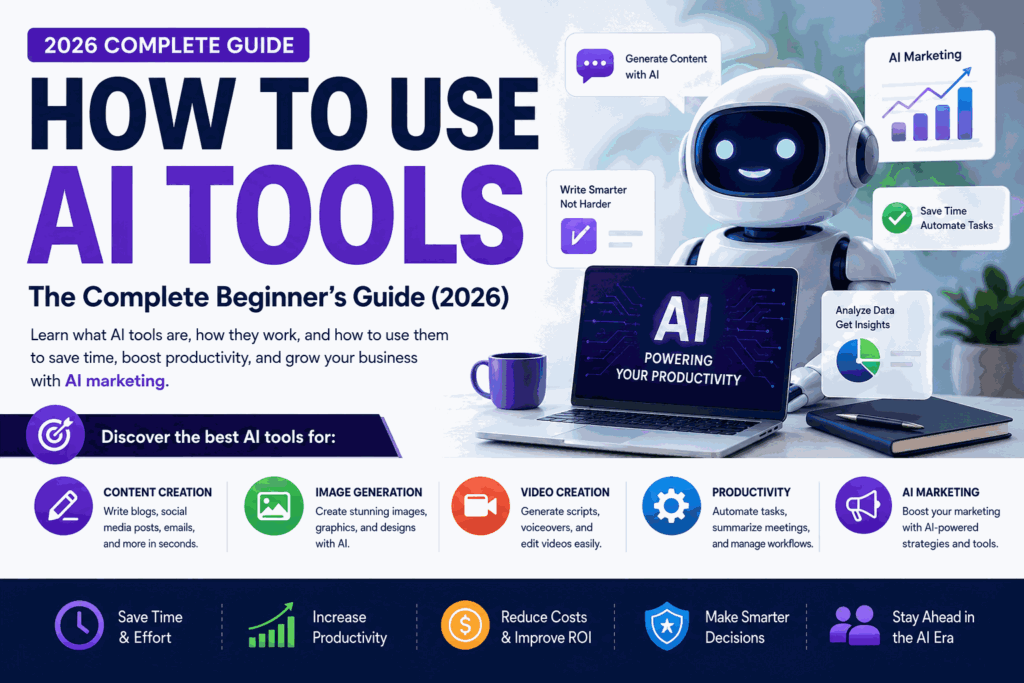 How to Use AI Tools: The Complete Beginner's Guide (2026)23 Jul 2026 Digital Marketing
 -
 AI Marketing Campaigns: Your 2026 Playbook for Strategy and Brand Benchmarks13 Jul 2026 Digital Marketing

Discover the top reasons businesses fail at digital marketing and learn practical strategies to improve SEO, content marketing, lead generation, and online growth. Avoid common mistakes and build a results-driven digital marketing strategy that delivers long-term success.
In today’s digital-first world, businesses have more opportunities than ever to reach potential customers online. From social media and content marketing to paid advertising and search engine optimization, the tools are available to help brands grow faster than ever before.
Yet many businesses still struggle to generate consistent leads, sales, and revenue through digital marketing.
The problem isn’t that digital marketing doesn’t work. The real issue is that many businesses approach it without a clear strategy, proper execution, or a deep understanding of their audience.As a leading Digital Agency in Calicut, we’ve worked with businesses across different industries and noticed a common pattern. Most marketing failures happen because businesses focus on tactics before building a strong foundation.In this guide, we’ll explore the biggest reasons businesses fail at digital marketing and, more importantly, how to fix them.
Artificial Intelligence is no longer a futuristic concept in marketing. It has become a practical tool that helps businesses create personalized customer experiences, improve campaign performance, and make smarter decisions. As we move into 2026, AI marketing campaigns are transforming how brands connect with their audiences.
Businesses of all sizes are using AI to automate repetitive tasks, analyze customer behavior, generate content, optimize advertising, and improve customer engagement. Companies with a clear AI marketing strategy are gaining a competitive advantage, while those that ignore it risk falling behind.
This guide explores how AI marketing campaigns work in 2026, how to build a winning AI marketing strategy, and the benchmarks that define successful AI-powered marketing.
What Are AI Marketing Campaigns?
AI marketing campaigns use artificial intelligence technologies to plan, execute, analyze, and optimize marketing activities. Instead of relying solely on manual processes, marketers can use AI tools to automate tasks and gain deeper insights into customer behavior.
These campaigns leverage machine learning, predictive analytics, natural language processing, and automation to improve efficiency and performance. Every one of these tactics works best when it’s guided by a coherent AI marketing strategy rather than used in isolation.
Examples of AI marketing campaigns include:
- Personalized email marketing
- AI-powered advertising optimization
- Automated customer support chatbots
- Predictive customer segmentation
- AI-generated content creation
- Dynamic website personalization
- Social media automation
The goal is simple: deliver the right message to the right audience at the right time.
Why AI Marketing Matters in 2026
Consumer expectations continue to rise. People expect personalized experiences, instant responses, and relevant content across every digital channel.
Traditional marketing methods often struggle to meet these demands. AI helps marketers process massive amounts of data and respond quickly to changing customer behavior — but only when it’s backed by a well-defined AI marketing strategy.
Several factors make AI marketing essential in 2026:
Better Customer Insights — AI can analyze customer data faster than any human team. It identifies patterns, preferences, and behaviors that help marketers create more effective campaigns.
Improved Personalization — Modern consumers expect brands to understand their needs. AI enables personalized recommendations, customized content, and tailored communication at scale.
Increased Efficiency — Marketing teams can automate repetitive tasks such as scheduling posts, sending emails, managing customer inquiries, and generating reports.
Higher ROI — AI helps optimize marketing budgets by identifying high-performing channels, targeting the right audiences, and improving campaign performance.
Faster Decision-Making — Real-time data analysis allows marketers to adjust campaigns quickly and respond to market changes immediately.
Where AI Marketing Stands in 2026
Adoption is no longer the question. Depending on the survey, somewhere between 76% and 88% of marketers now use AI tools in their daily workflow, and non-adoption has become the exception rather than the norm. Generative AI usage in at least one recurring workflow has climbed from roughly half of marketers in 2024 to the high-80s percentile in 2026.
But adoption and integration are two very different things. Most reports converge on an uncomfortable truth: while nearly every marketer touches AI in some capacity, only a minority — estimates range from about 6% to 30% depending on how “full integration” is defined — have embedded AI systematically across content production, campaign management, audience segmentation, and reporting simultaneously. That gap is where the real performance advantage lives. Teams using AI as connected infrastructure report meaningfully stronger ROI than teams using scattered, disconnected tools.
This is exactly why a documented AI marketing strategy matters more in 2026 than it did even a year ago. The shift in 2026 is also structural. AI has moved from isolated tactics — a chatbot here, a subject-line test there — into end-to-end campaign orchestration. Modern AI systems can now handle audience discovery, creative testing, channel deployment, real-time measurement, and budget reallocation in a single connected loop, compressing what used to be a weeks-long insight-to-action cycle into hours. Agentic workflows are the clearest expression of this: roughly a third of enterprise marketing teams now run at least one autonomous agent in production, more than double the share reported just two quarters earlier.
Building an Effective AI Marketing Strategy for 2026
Successful AI marketing campaigns require a clear AI marketing strategy. Simply adopting AI tools is not enough. Businesses need a structured approach.
Define Clear Marketing Goals
Every campaign should begin with specific objectives. Common goals include increasing brand awareness, generating leads, driving website traffic, improving customer retention, boosting online sales, and enhancing customer engagement. Clear goals help marketers choose the right AI tools and measure success accurately — and they form the foundation of any solid AI marketing strategy.
Collect Quality Data
AI systems rely on data to make decisions. Poor-quality data leads to poor results. Businesses should focus on collecting accurate information from website analytics, CRM systems, social media platforms, customer surveys, email marketing campaigns, and e-commerce platforms. Maintaining clean and organized data is essential for effective AI marketing.
Segment Your Audience
AI can identify customer groups based on behaviour, demographics, interests, and purchasing habits. Instead of targeting broad audiences, marketers can create highly personalized campaigns for specific customer segments. This improves relevance and increases conversion rates.
Use Predictive Analytics
Predictive analytics allows businesses to forecast future customer behaviour. For example, AI can identify customers likely to make a purchase, customers at risk of leaving, products customers may buy next, and the optimal times to send marketing messages. These insights help marketers make proactive decisions.
Automate Routine Tasks
Automation allows teams to focus on strategy and creativity. AI can automate email campaigns, lead nurturing, social media scheduling, customer service responses, and reporting and analytics. This saves time while improving consistency.
Treat AI as Infrastructure, Not a Feature
The single biggest differentiator between AI leaders and laggards isn’t which tools they use — it’s whether AI is woven into the operating model. That means redesigning briefs, approval chains, and reporting around AI-assisted workflows rather than layering AI onto an unchanged process — a shift that only happens with a deliberate AI marketing strategy behind it.
Optimize for Discovery Everywhere
As AI-mediated search and AI Overviews reshape how people find brands, visibility now depends on structured, verifiable information — accurate product data, clear service descriptions, consistent reviews — that AI systems can confidently surface. This is often called Generative Engine Optimization or Search Everywhere Optimization, and it extends beyond Google into platforms like TikTok, Reddit, and conversational AI assistants.
Shift Planning Upstream
Instead of reacting to last quarter’s performance, leading teams now model campaign outcomes before committing spend — forecasting channel impact, flagging saturation points, and catching diminishing returns before budget goes out the door. This predictive posture is replacing the historically reactive optimize-after-launch approach.
Keep Humans on Judgment, Not Just Execution
The organizations getting this right consistently describe the split the same way: AI handles speed, scale, and pattern recognition; humans retain positioning, creative judgment, and accountability for what gets published. Brands leaning too far into “AI slop” have faced real consumer backlash, and several — including well-known consumer brands — have started building campaigns that directly address AI fatigue while still using AI tools behind the scenes.
Prioritize First-Party Data and Transparency
As personalization gets more powerful, consumer wariness about how that personalization works is rising in parallel. Brands that are transparent about AI use — both their own and their partners’ — and that lean on first-party and zero-party data rather than opaque third-party targeting are better positioned as privacy expectations tighten.
Prepare for Agentic Customers, Not Just Agentic Marketing
It’s not only marketing teams deploying AI agents — increasingly, customers are too, using AI assistants to research, compare, and in some cases transact on their behalf. Brands need structured, machine-readable information about their products and services so that these assistants can accurately represent them, since the assistant — not the consumer — may be making the first cut of a decision.
AI Marketing Channels to Prioritize in 2026
Not all channels deliver the same results. Brands should focus on areas where AI provides the greatest impact, and channel prioritization should always flow from your broader AI marketing strategy.
AI-Powered Content Marketing — Content remains a core part of digital marketing. AI tools can assist with blog topic generation, content outlines, SEO recommendations, content optimization, and audience analysis. While human creativity remains important, AI helps marketers produce content more efficiently.
Email Marketing — AI enhances email marketing by personalizing subject lines, optimizing send times, segmenting subscribers, predicting customer interests, and improving engagement rates. Personalized email campaigns consistently outperform generic messages.
Social Media Marketing — AI helps brands manage social media more effectively through content scheduling, audience insights, trend analysis, social listening, and performance tracking. This allows businesses to stay relevant and engage with their audience consistently.
Paid Advertising — AI has significantly improved digital advertising. Platforms use machine learning to optimize bids, target audiences, allocate budgets, test creatives, and improve conversions. As a result, businesses can achieve better advertising performance with lower waste.
Customer Experience — AI-powered chatbots and virtual assistants provide instant support to customers, delivering faster response times, 24/7 availability, improved satisfaction, and reduced support costs. A positive customer experience often leads to stronger brand loyalty.
The Benchmarks That Matter
Numbers move fast in this space, and sources don’t always agree, but a few benchmark patterns show up consistently across independent research — and they’re worth building into any AI marketing strategy:
Adoption by function. Content creation remains the entry point for most organizations, with adoption rates in the 90% range for speeding up drafting and ideation. Email marketing and paid advertising follow closely, with AI now embedded in the majority of ad creative and copy workflows at large platforms.
ROI by use case. Returns vary widely by application. Content drafting and personalization engines tend to deliver the strongest blended returns, while AI-generated video and AI-generated paid social creative lag — partly because production overhead stays high even when generation is automated, and partly because major platforms have started quietly down-ranking obvious AI-generated ad creative in their 2026 ranking updates.
The measurement gap. This is the benchmark most worth sitting with. Despite near-universal adoption, only about 4 in 10 marketers can actually prove ROI on their AI investments — and that share has reportedly declined slightly even as adoption surged, suggesting teams are adopting AI faster than they’re building the measurement frameworks to justify it. Among teams that have adapted their measurement approach, though, the majority report returns of 2x or higher, rising sharply at large enterprises.
Speed and cost. Payback periods on AI marketing tooling have compressed significantly, with content-heavy teams often reaching payback in under three months. Cost per piece of AI-assisted content has also dropped substantially compared to traditional production, particularly for design and imagery.
Trust and governance. This is the softer side of the benchmark picture, but it’s increasingly a boardroom issue. A meaningful share of enterprises still lack formal AI governance frameworks, even as regulatory scrutiny increases. Brands that pair AI speed with clear governance and human oversight are the ones reporting the strongest customer trust scores alongside their performance gains.
Brand Benchmarks to Track
Measuring performance is critical. Businesses need benchmarks to evaluate whether their AI marketing campaigns are delivering results:
- Customer Engagement Rate — Track website interactions, social media engagement, video views, content shares, and email clicks. Higher engagement indicates that your content resonates with your audience.
- Conversion Rate — Measures how many users complete a desired action, such as purchases, form submissions, newsletter sign-ups, or demo requests. Strong AI campaigns should improve conversion rates over time.
- Customer Acquisition Cost (CAC) — Shows how much it costs to acquire a new customer. AI helps reduce CAC by improving targeting and campaign efficiency.
- Customer Lifetime Value (CLV) — Measures the total revenue generated by a customer over time. AI-driven personalization often increases customer retention and lifetime value.
- Return on Marketing Investment — Businesses should monitor the revenue generated from their marketing activities compared to the amount invested. AI enables better budget allocation, leading to improved ROI.
- Customer Retention Rate — Retaining existing customers is often more cost-effective than acquiring new ones. AI helps identify at-risk customers and create personalized retention strategies.
Common Mistakes to Avoid
Although AI offers many advantages, businesses should avoid several common mistakes.
Relying Entirely on Automation — AI should support human marketers, not replace them completely. Creativity, emotional intelligence, and brand storytelling still require human involvement.
Ignoring Data Privacy — Customers expect brands to handle data responsibly. Businesses must comply with privacy regulations and maintain transparency about data collection practices.
Using Too Many Tools — Many companies invest in multiple AI platforms without a clear AI marketing strategy. Instead, focus on tools that align with business objectives.
Neglecting Human Oversight — AI systems can make mistakes. Regular monitoring ensures campaigns remain accurate, ethical, and aligned with brand values.
Future Trends in AI Marketing
Several trends are expected to shape AI marketing throughout 2026 and beyond, and each one should factor into how you evolve your AI marketing strategy.
- Hyper-Personalization — Brands will create highly customized experiences based on real-time customer behavior.
- AI Video Creation — AI-powered video generation tools will help businesses create engaging visual content more efficiently.
- Voice Search Optimization — As voice assistants become more common, marketers will optimize content for conversational search queries.
- Advanced Predictive Analytics — Businesses will use deeper predictive insights to anticipate customer needs before they arise.
- AI-Powered Customer Journeys — Marketing platforms will automatically personalize customer experiences across multiple touchpoints.
Where This Is Headed
The pattern across 2026 research is consistent: AI in marketing has stopped being a productivity hack and started being a strategic layer. The brands separating themselves aren’t necessarily using more AI — they’re using it inside a coherent system, with governance, measurement, and human judgment built in from the start. That’s the real 2026 playbook: not chasing every new tool, but building the infrastructure, discipline, and trust that make an AI marketing strategy actually translate into brand growth.
If there’s one number worth remembering from all of this, it’s the gap between the roughly 9 in 10 marketers using AI and the roughly 4 in 10 who can prove it’s working. Closing that gap — through better measurement, clearer attribution, and disciplined integration — is where the next wave of competitive advantage will come from.
Conclusion
AI marketing campaigns are becoming a fundamental part of modern business growth. In 2026, successful brands will use a well-built AI marketing strategy not only to automate tasks but also to create meaningful customer experiences, improve personalization, and make data-driven decisions.
The most effective approach combines AI technology with human creativity. Businesses that balance automation, strategic thinking, and authentic brand communication will achieve the strongest results.
Whether you are a startup, small business, or established enterprise, now is the time to build an AI marketing strategy that aligns with your goals. By focusing on customer insights, personalization, automation, and performance measurement, your brand can stay competitive and thrive in the evolving digital landscape.
Pingback: Top SEO Agency in Malappuram | Best 10 Picks for 2026
Pingback: The Future of Digital Marketing: Strategies That Drive Business Growth in 2026 | Captica